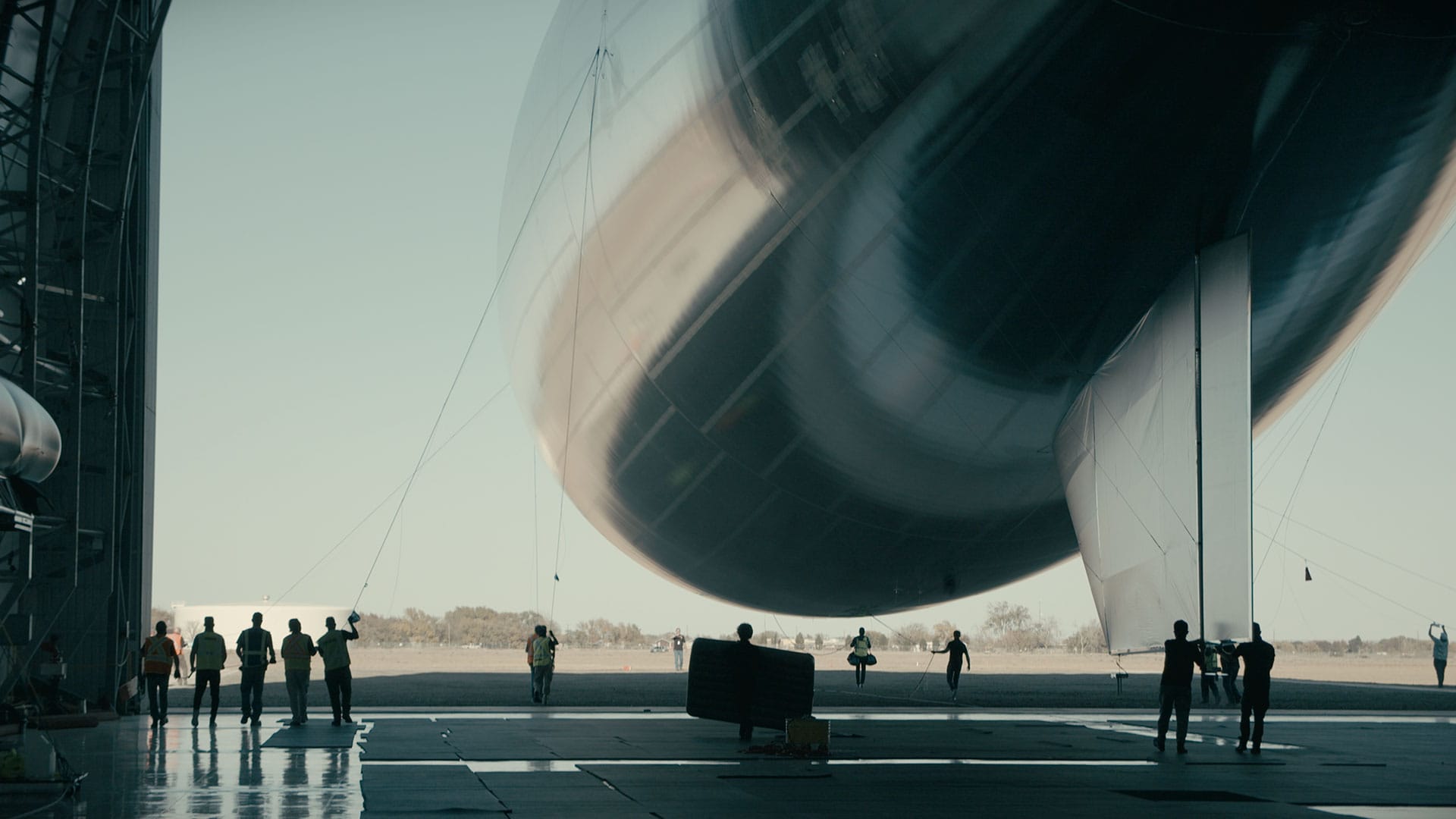

HAPS Vs Satellites: Which Wins For Stratospheric Coverage?
1. The Question Itself Reveals a Shift in How We Look at Coverage
For most of the last thirty years, the discussion about how to reach remote or underserved regions from above was presented as a choice between ground infrastructure and satellites. The advent of high-altitude platform stations has presented the possibility of a third option that does not make sense in either category This is exactly what makes the comparison interesting. HAPS aren't trying to replace satellites in all ways. They're competing for specific use instances where the physics behind operating at 20 kilometres instead of 35,000 or 500 kilometers produces significantly better results. Understanding whether that advantage is valid and where it's not will be the main focus of this game.
2. In the battle for latency, HAPS win Cleanly
Signal travel time is governed by distance, and distance is a factor that stratospheric platforms hold an undisputed advantage in structure over any orbital system. Geostationary satellites span 35,786 km above the equator, producing an average round-trip latency of 600 milliseconds. This can be utilized to call calls without noticeable delay, problematic for real-time applications. Low Earth orbit satellites have significantly improved this functioning at 550 to 1,200 kms, and have latency that is in the 20 to 40 millisecond range. A HAPS device at 20 kms can produce latency numbers equivalent those of terrestrial systems. In applications where responsiveness is important — industrial control systems emergency communications, financial transactions direct-to-cell connectivity that difference is not marginal.
3. Satellites win on global coverage And That's the Thing
The current stratospheric platforms can cover the entire planet. Just one HAPS vehicle covers a regional space — huge in terrestrial terms, but very limited. In order to achieve global coverage, one would need a network of platforms distributed around the globe, each requiring its own operations along with energy systems and stationkeeping. Satellite constellations, specifically large LEO networks, can cover the globe with overlaid coverage in ways that stratospheric infrastructure simply isn't capable of replicating with current vehicles counts. When it comes to applications that require truly global reach such as maritime tracking, global messaging, polar coverage, satellites are the only option that is viable at size.
4. Resolution and Persistence Favour the HAPS program for earth Observation
In the event that the mission requires monitoring an area continuously – -for example, tracking methane emissions in an industrial corridor, monitoring the spread of wildfires in real time or observing oil pollution expanding from an incident offshore — the continuous proximity of a stratospheric platform produces data quality that satellites struggle to keep up with. Satellites operating in low Earth orbit will pass over any particular point on the floor for minutes at time as well as revisit intervals that are measured in hours or even days based on the size of the constellation. A HAPS vehicle that is in position above the same region for weeks, provides continuous observations with sensor proximity which enables far higher spatial resolution. In the case of stratospheric observation this persistence is usually more valuable than the global reach.
5. Payload Flexibility is an HAPS Advantage Satellites can't simply match
After a satellite has been launched, its payload will be fixed. Making changes to sensors, swapping hardware, or adding new instruments will require the launch of an entirely new spacecraft. The stratospheric platform returns back to ground between missions This means that the payload can be modified, reconfigured or completely replaced as the mission demands change or more advanced technology becomes available. The airship's design allows for an effective payload capacity, which enables combinations of communications antennas, carbon dioxide sensors as well as disaster detection systems on the same platform with the flexibility that would require multiple dedicated satellites to replicate each with their own launch cost and orbital slot.
6. The Cost Structure Is Significantly Different
Launching a satellite involves cost of the rocket along with ground segment development, insurance and the recognition that hardware malfunctions in orbit are permanent write-offs. Stratospheric platforms operate much like aircrafts. They can be recovered, inspected to be repaired, repositioned, and then relaunched. This doesn't automatically mean they're cheaper than satellites in a cover-area-by-area basis. But it influences the risk profile and the upgrade economics considerably. In the case of operators who are testing new products to enter new markets the capability to access and modify their platform rather just accepting it as an sunk expense is an essential operational advantage especially in the beginning commercial phases the HAPS sector currently trying to navigate.
7. HAPS Can Act as 5G Backhaul where satellites aren't Efficiently
The telecommunications network architecture that is facilitated by the high-altitude platform station that operates as a HIBS (which is effectively one of the cell towers in sky was designed to integrate with existing internet standards for mobile phones in ways that satellite access did not. Beamforming a telecom stratospheric antenna allows for dynamic allocation of signals across a larger coverage area which supports 5G backhaul equipment on the ground as well as direct-to devices simultaneously. Satellites are becoming increasingly efficient of this, but being closer to ground gives stratospheric platforms a distinct advantage in signal quality, strength and frequency and compatibility with spectrum allocations made for terrestrial networks.
8. Operational and weather risk differ dramatically between the two
Satellites, once in stable orbit, are often indifferent to the weather on Earth. The HAPS vehicle operating in the stratosphere has to contend with an environment that is more complicated to operate in stratospheric winds patterns as well as temperature gradients and the engineering challenge of being able to survive nighttime at high altitudes without losing station. The diurnal cycle, which is the daily rhythm of solar energy availability and the draw of power during the night is a design limitation that every solar-powered HAPS must overcome. The advancements in lithium-sulfur battery energy density as well as the solar cell's efficiency is closing the gap, but it is an important operational factor that satellite operators don't have to face in the exact same way.
9. The Truth is That They have different missions.
Making HAPS and satellites appear as an open-ended competition does not reflect how non-terrestrial infrastructure is likely to grow. The most accurate view is one with a layering structure in which satellites are able to handle global reach and applications in which universal coverage is the main factor in the stratospheric platform, while stratospheric platforms support the regional persistence mission -connectivity within geographically difficult environments, continuous monitoring of environmental conditions emergency response and the expansion of 5G into areas in which it is not economically feasible to roll out terrestrial networks. The positioning of Sceye's satellites reflects exactly what it says: a mobile platform that is specifically designed to work in certain regions, that can last for a longer period, and includes an electronic sensor and a communications load that satellites don't have the capacity to replicate at that elevation and the distance.
10. The Competition will eventually sharpen Both Technologies
There's an argument that the rise of credible HAPS programs has increased innovations in satellites and vice versa. LEO network operators have improved high coverage and latencies in ways that set the bar higher HAPS must clear to compete. HAPS developers have demonstrated constant regional monitoring capabilities, which is prompting satellite operators consider the frequency of revisit and resolution for sensors. They are also evaluating the Sceye and SoftBank collaboration targeting Japan's national HAPS network, with commercial services planned for 2026 is one of the clearest indicators yet that suggests that stratospheric platforms have gone from being a theoretical competitor to an active participant in determining how non-terrestrial technology of connectivity and observation markets develops. Both technologies will be more effective for the pressure. Read the recommended what does haps stand for for site recommendations including Lighter-than-air systems, what's the haps, softbank haps pre-commercial services japan 2026, Sceye Inc, whats haps, Solar-powered HAPS, sceye haps softbank partnership, softbank haps, Diurnal flight explained, Sceye Founder and more.
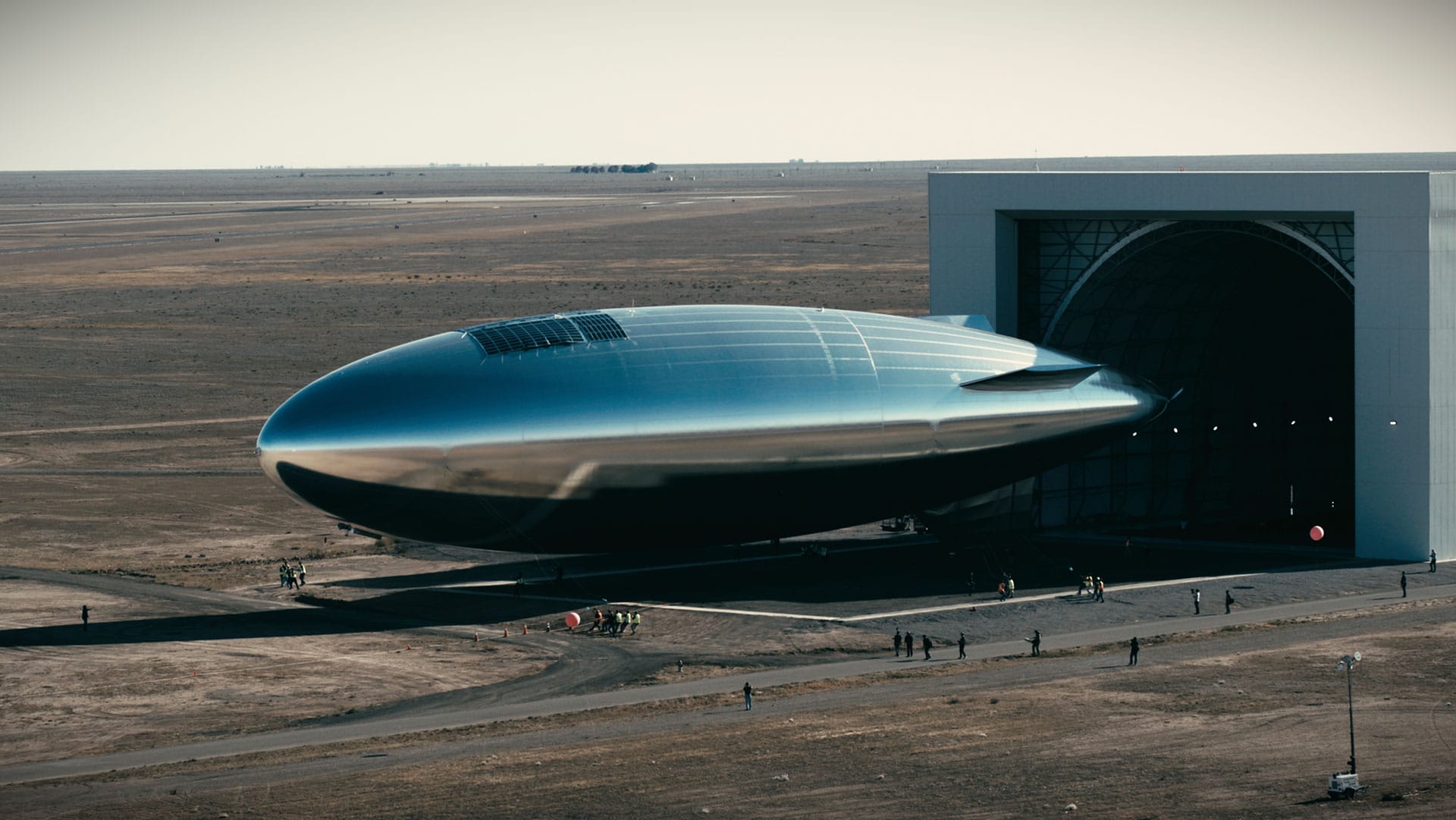
Sceye's Solar-Powered Airships Provide 5g In Remote Regions
1. The Connectivity Gap is an Infrastructure Economics Problem First
Around 2.6 billion people are still without reliable internet connectivity, and there is rarely not a shortage of technology. The reason is that there's no economic justification for deploying that technology in regions where population density is too low or the terrain is difficult or political stability is not stable enough to provide the typical return of infrastructure investment. Building mobile towers across mountainous archipelagos, deserted interior regions or in isolated island chains costs real money against the revenue projections, which do not support it. This is the reason why the gap in connectivity has remained through decades of work and genuine goodwill — the reason isn't lack of awareness or desire however, it's the unit cost for terrestrial rollout in areas that do not fit into the standard infrastructure plan of action.
2. Solar-powered airships change the way we deploy Economics
A stratospheric plane that serves as an antenna for cell phones in the sky changes the expense structure associated with remote connectivity in ways that can be considered in a practical sense. A single platform that is 20 km in altitude covers a land area that would require dozens of terrestrial towers to replicate, but without civil engineering as well as land acquisition, power infrastructure, and constant maintenance that ground-based deployments need. The solar-powered component removes fuel logistics from the equation completely. The platform generates its energy from sunlight and store it in high-density battery which can operate for up to 24 hours, and can continue its work without the need for supply chains that penetrate remote areas. For areas where the obstacle to connectivity is only the high cost and complexity associated with physical infrastructure this is a truly distinct proposition.
3. The 5G Compatibility Questions Are More Important Than It Sounds
The ability to deliver broadband in the stratosphere is only economically viable that it is connected to equipment users actually own. Satellite internet was initially a requirement for specific terminals that were expensive, bulky, and impractical to be used in mass-market applications. The evolution of HIBS technology High-Altitude Inductive Base Station standards has changed this by making stratospheric networks compatible with existing 5G and 4G standards that smartphones use today. A Sceye airship, which functions as a telecom antenna in the stratospheric region can, in principle, use standard mobile devices without needing any additional hardware on one's own. This compatibility with existing platforms for devices is the distinction between a connectivity solution that reaches everyone within a zone of coverage and one that is limited to those who can afford the equipment.
4. Beamforming turns a Large Footprint into a Highly Targeted, Effective Coverage
The total coverage area of the stratospheric platform can be large however, raw coverage and effective capacity are two different things. Broadcasting signal uniformly across a 300-kilometre diameter footprint makes use of the vast majority of spectrum over uninhabited terrain, the open ocean, and other areas which have no active users. Beamforming technology permits the stratospheric radio antenna to direct energy-producing signals the areas where there is actual demand -fishermen in one shoreline and an agricultural zone in another, or a town affected by a disaster another. This smart signal management greatly increases the spectral efficiency, which will directly translate into the capabilities for actual users rather than the theoretical coverage limit that the platform is able to illuminate, with a single broadcast.
5G backhaul solutions benefit from the same principle -providing high-capacity internet connections to ground infrastructure nodes that need them rather than spraying capacity across a wide area.
5. Sceye's Airship design maximizes the payload that is offered for Telecoms Hardware
The telecoms component of the stratospheric platform — antenna arrays and signal processing equipment, beamforming equipment power management systemsactually weighs a lot and has a significant volume. Vehicles that use the majority of its energy and structural budget staying on the ground has little left over for significant telecoms equipment. Sceye's lighter than air design addresses this issue directly. Buoyancy transports the vehicle with no an ongoing energy cost for lifting. That means the available capacities and power sources can support a telecoms network large enough to provide commercially worthwhile capacity, rather than just a token signal over an enormous area. Airship architecture isn't insignificant to the connectivity goal — it's what makes carrying a large telecoms payload along with other mission equipment practical.
6. The Diurnal Cycle Governs Whether the Service is Intermittent or Continuous.
Connectivity that works during daylight hours and is dark at night isn't an actual connectivity solution — it's an exhibit. If Sceye's solar-powered Airships are to offer the kind of constant connectivity that remote communities and emergency response personnel commercial operators rely on, it must resolve the issue of overnight energy with a high degree of reliability and repeatability. The diurnal energy cycle — producing sufficient solar energy in daylight hours to run all systems as well as charge batteries enough to maintain full operation until next sunrise — is the primary engineering limitation. The advancements in lithium sulfur battery energy density that is approaching 425 Wh/kg and improving the efficiency of solar cells on aerospheric planes are the key to closing this loop. Without both endurance and continuity, the concept of endurance remains more theoretical than practical.
7. Remote Connectivity is Adding Social and Economic Impacts
Connecting remote areas doesn't come from a pure humanitarian motive in the sense of abstract. Connectivity allows telemedicine, which reduces the cost of healthcare in remote areas that aren't served by nearby hospitals. It allows distance education that does not require the construction of schools for every community. It provides financial services access that replaces the cash-dependent economy by the effectiveness that digital transactional transactions offer. It enables early warning systems of the effects of natural catastrophes reach the populations that are most vulnerable. Each of these effects will intensify as communities increase their digital literacy and local economies become more reliant on reliable connectivity. The vast internet rollout starting to provide coverage to remote areas isn't simply delivering a luxuries as it is providing infrastructure with downstream impacts across schools, health and economic inclusion.
8. Japan's HAPS Network Shows What a National-Scale Operation Looks Like
It is believed that the SoftBank agreement with Sceye that aims to provide the pre-commercialization of HAPS options in Japan in 2026 is important due to its magnitude. A nation-wide network involves multiple platforms that provide overlapping and continuous coverage across the country's geography includes thousands of islands, mountains in the interior, long coastlinesand creates precisely the kind of coverage issues that stratospheric connectivity was created to tackle. Japan also provides a sophisticated technological and regulatory framework where the operational challenges associated with managing stratospheric networks at a national scale are expected to be confronted and resolving in a manner that will provide lessons to any future deployment elsewhere. What's happening in Japan can be used to determine what works over Indonesia as well as other countries like the Philippines, Canada, and any other country with similar areas of coverage and geography.
9. The Founder's Viewpoint Shapes How the Connectivity Mission Is Reframed
Mikkel Vestergaard's guiding principle at Sceye thinks of connectivity not as a commercial product that happens to get into remote regions, but as an infrastructure that has a social obligation that is attached to it. This framework influences the deployment scenarios the company prioritizes and the partnerships it seeks to establish as well as how it presents the mission of its platforms before regulators, investors and potential operators. The emphasis on remote regions and communities that aren't served, as well as disaster-resistant connectivity is an indication of the stratospheric layer being constructed must serve the communities who are least benefited by existing infrastructure. It's not an afterthought for charity, instead, it is a basic element of design. Sustainable aerospace innovations, in Sceye's terminology, means creating solutions to real gaps rather than providing better service to people already covered.
10. The Stratospheric Connectivity Layer is Beginning to Look Unlikely
For many years, HAPS connectivity existed primarily as a concept which periodically attracted funding and created demonstration flights without producing commercial services. The combination between maturing battery chemistry, increasing performance of the solar cells HIBS Standardisation that allows device compatibility and solid commercial partnerships has altered the horizon. Sceye's airships powered by solar represent an amalgamation of these technologies at a time when the demand side of things – remote connectivity, disaster resilience, 5G extension — has never been better defined. The stratospheric layer between terrestrial satellites and orbital networks is not slowly settling all around. It's now beginning to be constructed deliberately, with specific target coverage goals, specific technical specifications, and even specific commercial timelines linked to it. See the most popular HIBS technology for website recommendations including detecting climate disasters in real time, what are haps, Sceye Inc, Stratosphere vs Satellite, softbank investment sceye, softbank group satellite communication investments, what are the haps, Stratosphere vs Satellite, sceye haps airship status 2025 2026, Solar-powered HAPS and more.